
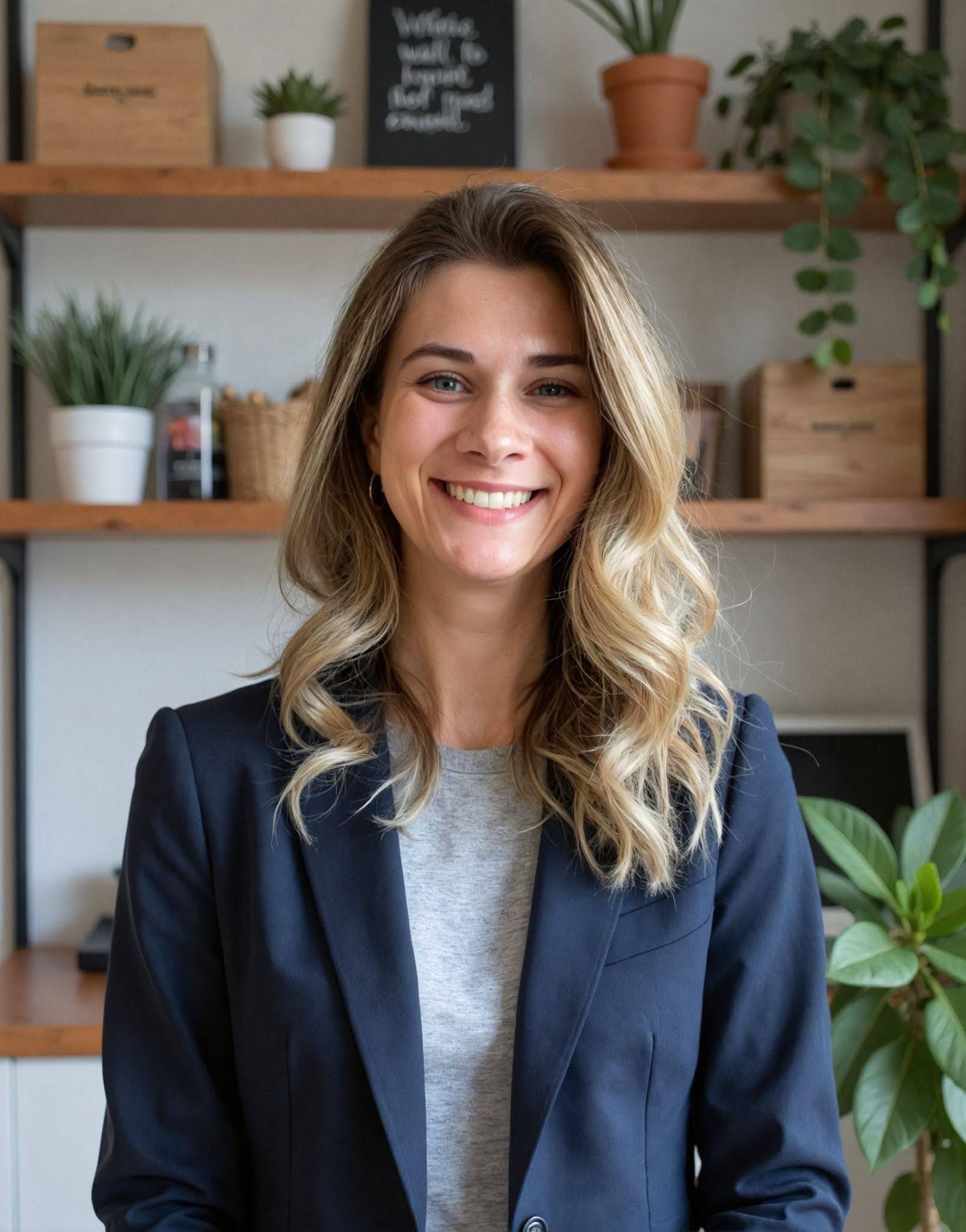
Hi, I'm Megan

And I'm so glad you're here.

I grew up asking too many questions and being mildly annoying about it. That turned out to be the only qualification that mattered.

I didn’t grow up dreaming about becoming a consultant.

My path into this work was not linear, which is probably why I’m good at spotting the non-linear problems inside other people’s businesses. I started in customer success, which taught me that most complaints are actually symptoms of something upstream. Then I moved into sales leadership, where I learned that revenue problems are rarely sales problems. They’re usually handoff problems, process problems, or “we’ve always done it this way” problems.

From there I went deep into operations and implementation, building systems for companies that had outgrown theirs. I’ve worked in startups where the playbook was being written in real time, and in established companies where the playbook was so old nobody remembered why it existed. I’ve studied psychology because people are the variable every system forgets to account for. And I’ve spent the last few years figuring out where AI and automation actually belong — which is almost never where the vendors say it does.

What I do now is the sum of all of that. I help business owners and leadership teams find the problems they’ve stopped noticing, then build systems that make those problems stay gone. I work remotely with clients across the country, mostly in construction, trades, and growing service operations. The businesses that call me are not broken. They’re just tired of working harder than they need to.

My Story

Curiosity Has Always Been My Greatest Strength

I’ve always been fascinated by how organizations work—the decisions people make, the systems they build, and the challenges that quietly slow progress. Over the years, I’ve partnered with businesses to uncover what isn’t immediately visible, helping leaders move beyond assumptions and toward real, sustainable improvement.

My approach isn’t about delivering a pre-built framework or a one-size-fits-all solution. It’s about listening, learning, and understanding the unique story behind every business before recommending the path forward.

What I Bring

I don’t walk in with a template. I walk in with a notebook and a lot of questions. Here is what that tends to produce:

Pattern recognition

I’ve seen enough broken systems to know what the cracks look like before they become fractures.

Translation

I can talk to your operations team, your sales team, and your leadership team in the same meeting without anyone needing a glossary.

Practicality

I have no interest in recommendations that require three new hires and a six-month timeline. If it can’t be implemented, it’s not a solution.

Honesty

I will tell you if the problem is simpler than you think, if it’s harder than you think, or if you’re solving the wrong problem entirely.

Follow-through

I don’t hand over a deck and disappear. I stay until the change actually sticks, which is usually the hard part.

Outside Work

I believe the best consultants have lives outside of consulting. Otherwise you become the kind of person who uses “leverage” as a verb at dinner parties. Here is what I do when I’m not fixing other people’s businesses:

Researching things I didn’t need to know

I have a browser history that would confuse a forensic analyst. Currently: the history of lighthouse engineering, for no reason whatsoever.

Traveling

Mostly to places with good coffee and bad cell service. The best ideas show up when you’re not reachable.

Too many cats

The exact number is classified, but it’s more than the average person considers reasonable and fewer than the number that would qualify as a problem.

Coffee

I have opinions about roast profiles that I will share whether you asked or not.

Convincing myself I need one more.

This applies to notebooks, plants, and side projects. It rarely applies to actual needs.

What I Value

Find the Problem Before the Solution

It’s easy to focus on symptoms. The real opportunity lies in understanding what’s causing them. By taking the time to ask thoughtful questions and explore the bigger picture, we can solve the right problems—not just the obvious ones.My role isn’t to tell you what to do. It’s to help you see your business differently, uncover opportunities you may have missed, and make confident decisions that support sustainable growth.

Clarity
0%
Collaboration
0%
Practical Impact
0%
Scroll to Top